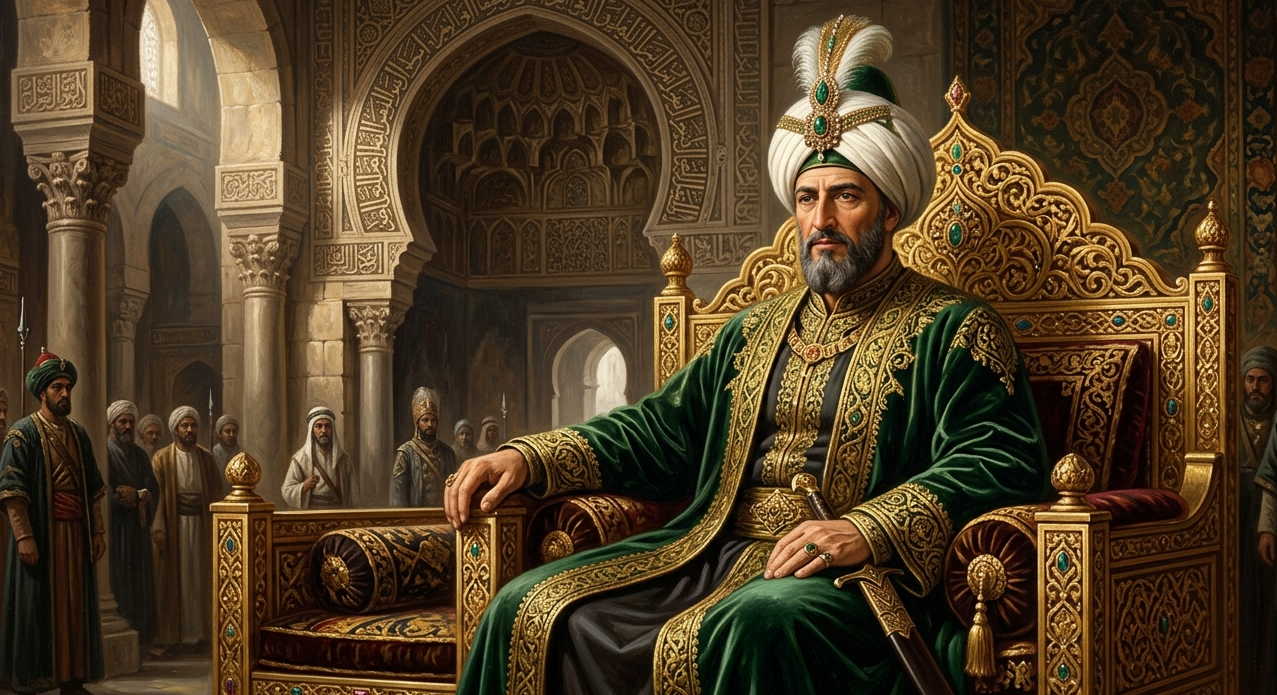
The Sword of Islam — Every Battle That Shaped a Legend
Introduction: The Warrior Sultan
Sultan Salahuddin Ayyubi — known in the West as Saladin — stands as one of the most formidable military commanders in all of human history. Born in 1138 CE in Tikrit, Iraq, into a Kurdish family of soldiers and administrators, Salahuddin rose from a junior military officer to the founder of the Ayyubid dynasty and the undisputed champion of the Islamic world. His military career spanned nearly three decades, during which he fought wars on multiple fronts — against Crusader kingdoms, rival Muslim rulers, Byzantine allies, and rebellious governors — all while maintaining a reputation for personal courage, strategic brilliance, and extraordinary chivalry toward both allies and enemies.
What distinguished Salahuddin from other conquerors was not merely the number of battles he fought but the manner in which he fought them. He combined meticulous preparation, psychological warfare, and flexible battlefield tactics with a moral code that earned the admiration of the entire medieval world. This article covers every significant war, campaign, and battle of Sultan Salahuddin Ayyubi in chronological order.
1. The Egyptian Campaigns (1164–1169 CE)
Salahuddin’s military career began not with the Crusaders but with the political struggle for control of Egypt. The Fatimid Caliphate of Egypt — a Shia dynasty — was weakened by internal power struggles and factional conflicts. Both the Crusader Kingdom of Jerusalem and the Sunni Zengid ruler Nur al-Din of Syria recognized Egypt’s strategic importance and competed to bring it under their influence.
First Campaign (1164 CE)
Salahuddin accompanied his uncle, Asad al-Din Shirkuh, on the first military expedition into Egypt at the invitation of the Fatimid vizier Shawar, who sought Zengid help against a rival. The Zengid force successfully restored Shawar to power, but Shawar then switched allegiances to the Crusaders. Shirkuh and Salahuddin were forced to withdraw after a prolonged standoff.
Second Campaign (1167 CE)
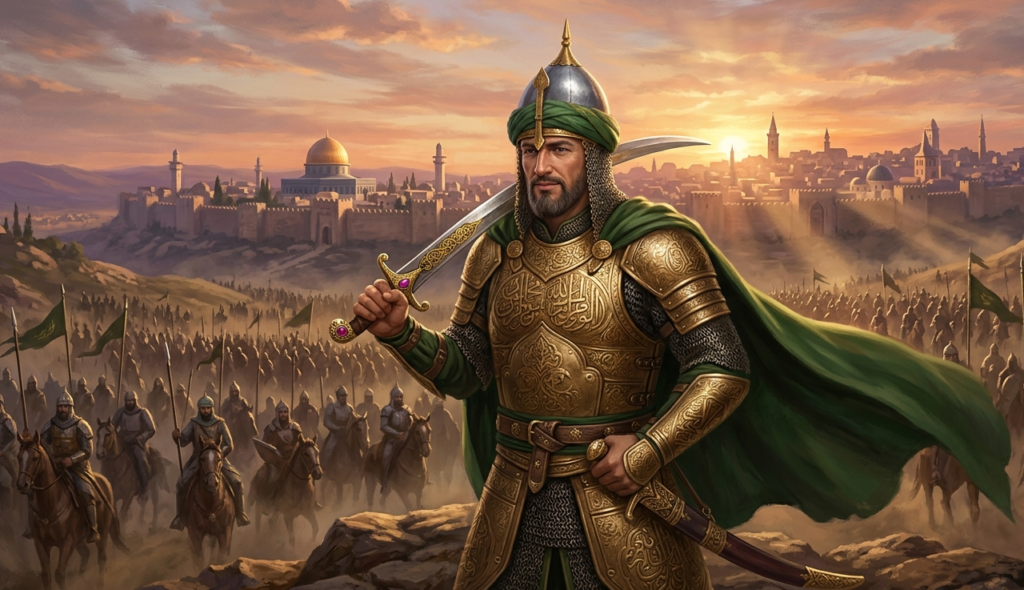
Shirkuh returned to Egypt in 1167 CE, and Salahuddin played a crucial role in a decisive engagement near Alexandria. Outnumbered and besieged in Alexandria, Salahuddin held the city against a combined Crusader-Fatimid force while Shirkuh maneuvered in the countryside. Though the Zengids ultimately negotiated withdrawal, Salahuddin’s steadfastness under siege earned him wide recognition as a commander of exceptional resolve.
Third Campaign & Full Control (1168–1169 CE)
The third and decisive campaign came when the Crusaders, breaking their alliance with the Fatimids, attacked Egypt themselves. The Fatimid vizier turned to Shirkuh for help, and the Zengid force re-entered Egypt. This time there was no withdrawal. Shawar was captured and executed; Shirkuh became vizier, and upon Shirkuh’s sudden death in 1169 CE, Salahuddin assumed the vizierate. He had, at the age of 31, become the effective ruler of Egypt. In 1171 CE, he peacefully ended the Fatimid Caliphate, restoring Sunni Abbasid authority, and became the independent sultan of Egypt.
| ⚔️ Strategic Significance: Control of Egypt gave Salahuddin the wealth, manpower, and naval resources necessary to challenge the Crusader states. Without Egypt, no campaign against Jerusalem would have been possible. |
2. Wars of Unification — Consolidating the Muslim World (1174–1186 CE)
Salahuddin understood that the Crusader states could never be permanently defeated as long as the Muslim world remained fragmented. His next major military effort was therefore directed at unifying the Muslim territories of Syria, Mesopotamia, and beyond under a single banner. These wars were not wars of aggression for personal gain. Salahuddin consistently framed them as a necessary precondition for liberating Jerusalem.
Table of Contents
Conquest of Damascus and Syria (1174–1176 CE)
Following the death of Nur al-Din in 1174 CE, Salahuddin moved swiftly into Syria. He entered Damascus, the jewel of the Arab world, without significant resistance, as the population welcomed him. He then methodically brought Homs, Hama, and other Syrian cities under his control, usually through diplomacy and negotiation rather than prolonged warfare. Where force was needed, it was applied decisively but without unnecessary destruction.
Campaigns in Mesopotamia (1182–1186 CE)
To complete his encirclement of the Crusader states, Salahuddin turned to Mesopotamia (modern Iraq). Over several years of campaigns, he subdued the cities of Mosul, Aleppo, and other key centers, bringing their rulers—the Zengid princes—into nominal submission. By 1186 CE, Salahuddin had united an enormous arc of territory stretching from Egypt through Syria and into northern Mesopotamia. The Crusader states now sat in the center of a unified Islamic world for the first time.
| ��️ Military Achievement By 1186 CE, Salahuddin controlled Egypt, Syria, Yemen, parts of the Hijaz, and Mesopotamia—surrounding the Crusader states on all sides and cutting off their potential for reinforcement. |
3. The Battle of Hattin—July 4, 1187 CE
The Battle of Hattin is universally regarded as Salahuddin’s greatest military masterpiece and one of the most decisive engagements in medieval history. It was the battle that broke the back of Crusader military power and opened the road to Jerusalem.
Background: Salahuddin provoked the Crusaders strategically by attacking the town of Tiberias on the western shore of the Sea of Galilee. The Crusader leadership — King Guy of Lusignan, Raymond III of Tripoli, and Raynald of Chatillon — debated furiously about whether to march to relieve Tiberias. Against Raymond’s wiser counsel to stay near water sources, the Crusader army marched across the waterless plateau of the Galilee in the height of summer.
The Trap: Salahuddin had anticipated exactly this move. His forces shadowed the Crusader army, harassed them with arrows, cut off their route to the Jordan River, and set the dry grass ablaze, filling their path with smoke and denying them water for both men and horses. By the morning of July 4, the dehydrated and exhausted Crusader army made its final stand near the twin hills known as the Horns of Hattin.
The Outcome: The result was catastrophic for the Crusaders. King Guy of Lusignan was captured along with nearly the entire Crusader nobility. Raynald of Chatillon — who had repeatedly violated truces and attacked Muslim pilgrim caravans — was personally executed by Salahuddin. The True Cross, the Crusaders’ most sacred relic, was captured. Within days, Crusader-held cities across the region surrendered one after another, unable to resist without their army.
| Battle Result At Hattin, the entire Crusader field army was destroyed in a single engagement. Over 20,000 soldiers were killed or captured. The military power that had sustained the Crusader kingdoms for nearly a century was shattered in one afternoon. |
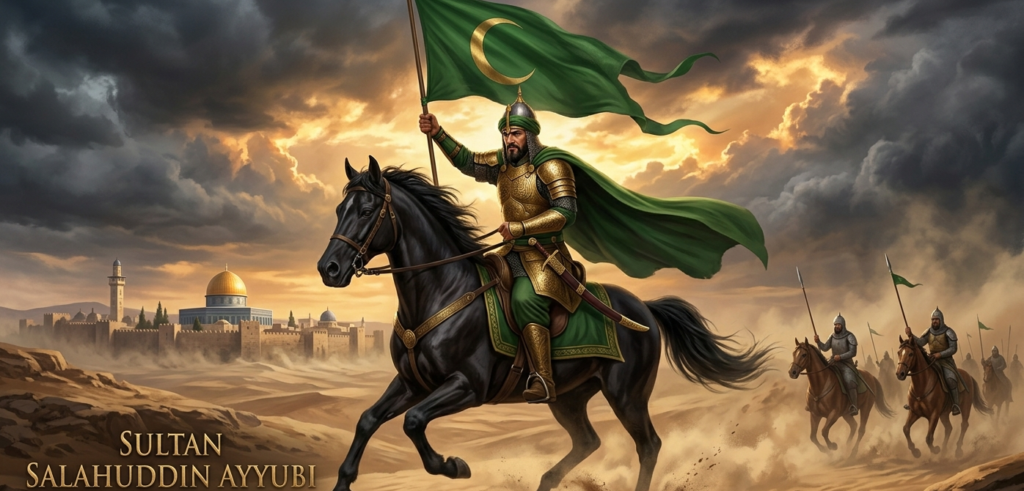
4. The Siege and Liberation of Jerusalem — October 1187 CE
With the Crusader army annihilated at Hattin, the great cities of the Holy Land fell in rapid succession. Acre, Jaffa, Sidon, Beirut, and Ascalon all surrendered within weeks. Then Salahuddin turned to the ultimate prize: Jerusalem.
The siege of Jerusalem began on September 20, 1187 CE. The city was defended by Balian of Ibelin with a garrison cobbled together from civilians, knights who had escaped Hattin, and a desperate but determined population. Balian negotiated terms skillfully, but Salahuddin held all the cards.
On October 2, 1187 CE — the anniversary of the Prophet Muhammad’s Night Journey to Jerusalem in Islamic tradition — Salahuddin’s forces entered the Holy City. What followed was a demonstration of mercy that astonished the medieval world. In sharp contrast to the bloodbath carried out by the Crusaders when they captured Jerusalem in 1099 CE, Salahuddin ordered that no civilians be harmed. Christians were permitted to leave in exchange for a ransom. For those who could not pay, Salahuddin released thousands from his own treasury. Churches were protected. The city’s Jewish community, expelled by the Crusaders, was permitted to return.
| ✨ Historical Legacy The liberation of Jerusalem in 1187 CE is considered Salahuddin’s crowning achievement. His mercy shocked and humbled his enemies. European chronicles, including those written by his adversaries, praised his conduct as the model of a true knight and ruler. |
5. The Third Crusade — The War Against Richard the Lionheart (1189–1192 CE)
The fall of Jerusalem sent shockwaves through Europe. Pope Gregory VIII declared a new Crusade, and three of Europe’s most powerful monarchs answered the call: Richard I of England (Richard the Lionheart), Philip II of France, and Frederick I Barbarossa of Germany. Barbarossa drowned en route, but Richard and Philip arrived with formidable forces, beginning the Third Crusade.
Siege of Acre (1189–1191 CE)
The Third Crusade opened with the prolonged and brutal siege of Acre. The Crusaders besieged the city from the land while Salahuddin’s forces besieged the besiegers. For nearly two years, both sides suffered enormous casualties. Acre finally fell to the Crusaders on July 11, 1191 CE—a significant setback for Salahuddin. Richard I then committed one of the most controversial acts of the war: the massacre of approximately 2,700 Muslim prisoners at Acre, an act that horrified even some of his own allies.
Battle of Arsuf (September 1191 CE)
As Richard’s army marched south along the coast toward Jerusalem, Salahuddin’s forces harassed them relentlessly. At Arsuf, Salahuddin attempted to break the Crusader formation with repeated cavalry charges. Richard maintained extraordinary discipline in his marching formations, and when the moment came, he unleashed a coordinated charge that repulsed Salahuddin’s forces. Arsuf was a tactical victory for Richard, demonstrating that he was a genuinely formidable opponent.
Campaigns Around Jerusalem (1192 CE)
Richard advanced toward Jerusalem twice but stopped short of a direct assault on both occasions, recognizing that even if he captured the city, he lacked the forces to hold it. Salahuddin, meanwhile, avoided pitched battles where possible, using guerrilla tactics, scorched-earth policies around Jerusalem, and raids on Crusader supply lines to keep Richard off balance.
The Treaty of Jaffa (September 1192 CE)
After three years of grueling warfare, both sides were exhausted. The Treaty of Jaffa was agreed upon in September 1192 CE. Under its terms, Jerusalem remained in Muslim hands. Crusaders retained a coastal strip from Tyre to Jaffa. Christian pilgrims were guaranteed safe passage to visit Jerusalem’s holy sites. It was a diplomatic victory for Salahuddin—he had fought the greatest military force medieval Europe could assemble and kept Jerusalem.
| The Noble Rivalry During the Third Crusade, remarkable acts of mutual respect occurred between Richard and Salahuddin. When Richard fell ill, Salahuddin sent his personal physician and gifts of fruit and ice. When Richard’s horse was killed in battle, Salahuddin sent fresh horses. They never met in person, but their correspondence reveals two leaders who deeply respected each other across the divide of war and religion. |
Conclusion: The Legacy of a Warrior-Saint
Sultan Salahuddin Ayyubi fought wars on four fronts across nearly thirty years—against the Crusader kingdoms, rival Muslim rulers, Byzantine-backed forces, and internal rebellions. Yet he is remembered not simply for his conquests but for the manner of his warfare and the man behind the sword.
His military genius lay in patience, preparation, and the ability to unite divided peoples behind a common cause. His victories at Hattin and Jerusalem were not flukes—they were the result of years of careful political consolidation, economic development, and strategic encirclement. When the moment came to strike, he struck with devastating precision.
Salahuddin died on March 4, 1193 CE, in Damascus — just six months after the Treaty of Jaffa. When his treasury was counted, there was barely enough gold to pay for his funeral. He had given everything he owned to the poor, to his soldiers, and to the cause he served. He left behind no personal fortune—only an empire, a legend, and a moral standard that leaders across all faiths and centuries have tried, and rarely managed, to match.
Today, Salahuddin Ayyubi is honored not only in the Muslim world but in the West as well—as a knight, a statesman, a warrior, and above all, a man of extraordinary character. His wars were fought with steel, but his greatest victories were won with honor.

?? ?????? ??????? ???????????? ?????? ??????????.
????? ???? ??????????? ?????????? ????? ??????????? ??? ?????? ????????.
???? ???-???? ??????? ??????? ? ????????? ?????????.
??????????? ??????????? ?????????? ?????????????? ?? ???? ????? ?????????.
https://rosotels.ru/detail/2026-05-22-tri-kita-na-kotorykh-mozhet-poekhat-voyna-pochemu-2026-y-stal-dnyom-iks.htm
Узнайте [url=https://movingwaldo.ru/raschet-perevozki-gruza]грузоперевозки цена[/url] на нашем сайте и планируйте выгодные перевозки без лишних затрат.
Важным аспектом ценообразования является скорость выполнения заказа.
Здоровое гемблинг-поведение в цифровых развлечениях — это совокупность правил, ориентированных на защиту психики пользователей.
Эта концепция включает добровольное ограничение времени и денег на сессии.
Игроку рекомендуется заранее выставлять бюджет и строго соблюдать его ни при каких обстоятельствах.
Сайты честного i-gaming обязаны давать инструменты для тестов на зависимость и пауз.
К признакам проблемы являются попытки вернуть проигранное и игнорирование повседневными обязанностями.
Ответственная игра учит воспринимать к казино как к развлечению, а не способу дохода.
За счёт применения этих установок азарт остаётся в контролируемых рамках, без вреда для человека.
https://rosmet-nn.ru/full/tri-aeroporta-sgoreli-v-perenosnom-smysle-zakryvayut-dveri-218/
Если вам необходимо [url=https://zamok-key.ru/]служба по вскрытию замков дверей спб[/url], мы готовы быстро и профессионально вам помочь.
Процесс начинается с оценки конструкции запорного устройства и подбора оптимального инструмента для выполнения задачи.
В случаях, когда обычные методы не подходят, применяют более сложные техники, такие как прокол или разрушение замка.
Чтобы заказать качественный [url=https://alcodostavkamsk.msk.ru/]доставка алкоголя в москве круглосуточно[/url], достаточно просто оформить заказ на нашем сайте.
Скорость доставки также играет значительную роль.
Si vas quieres encontrar donde reservar jets de agua en este lugar, hay distintas ofertas interesantes tanto en el area sur como en distintas zonas como esta conocida zona y Playa de las Americas. Lograras hallar alquiler moto de agua Tenerife sur con importes convenientes y salidas como jet bike safari o aqua safari que combinan emocion y panoramas asombrosos. Para alternativas mas especificas, tambien hay la opcion de reservar motos de agua en Tenerife Los Gigantes o gozar actividades en el agua en este enclave. Para mas datos sobre opciones disponibles y precios, te aconsejo visitar [url=https://alquilerjetskitf.com]motos de agua radazul[/url] .
Tambien, Tenerife brinda recursos para cualquier nivel, desde principiantes hasta expertos, con empresas como Jet Hub Tenerife y Adrenalina Jet que llevan a cabo excursiones en jets de agua y jet ski safaris en lugares como Costa Adeje. Si te interesa una aventura integral y tranquila, evalua las excursiones motos de agua Tenerife sur o en distintas areas, y no pases por alto que asegurar con anticipacion siempre resulta conveniente, especialmente en la temporada alta. Por si lo requieres, el telefono +34 612 345 678 se torna util para consultas rapidas.